

This short article introduces the Brown-necked Parrot (Poicephalus fuscicollis fuscicollis), a fascinating yet often overlooked member of the African Poicephalus genus. Based on ten years of hands-on experience with this species in human care, it aims to provide an insight into its biology, behaviour and distinctive character - highlighting why this parrot deserves far greater attention than its modest appearance might suggest.
Since first encountering the Brown-necked Parrot in real life many years ago, I have been strongly drawn to its unique appearance and character. The species is immediately recognisable by its robust, almost coarse body structure and, most notably, by its exceptionally large and powerful beak, which appears disproportionate to the rest of the bird, which also applies to its rather long legs. This peculiar morphology gives the species a distinct and almost primitive presence that sets it apart within the genus.
In the wild, the Brown-necked Parrot occurs across large parts of sub-Saharan Africa, including countries such as Senegal, The Gambia, Guinea, Sierra Leone, Liberia, Côte d’Ivoire, Ghana, Togo, Benin, Nigeria, Cameroon, the Central African Republic, South Sudan and western Uganda, where it is associated with open woodlands, miombo forests, savannah mosaics and riparian habitats. The species is adaptable and wide-ranging, and currently not considered threatened. However, local extinctions have been documented in several areas due to habitat degradation, agricultural expansion and local trapping. Field observations and telemetry data from recent years confirm that this - almost “clumsily” built - species is capable of extensive daily and seasonal movements, often travelling 30 - 80 km in search of temporarily available food sources such as seeding trees and fruiting species.
In the wild, the Brown-necked Parrot is typically encountered in pairs or small, loose groups, often joining larger mixed-species assemblies at feeding sites. The species is generally calm and observant, but alert, and shows a strong preference for elevated perching and long-distance flight between feeding and roosting areas. Vocalisations are relatively subdued compared to many larger parrots but are context-specific and appear to play an important role in pair cohesion. In human care, the species retains much of its reserved and watchful character. Once settled, individuals tend to be confident yet non-intrusive, forming stable pair bonds and showing a high degree of spatial awareness. Sudden environmental changes, excessive disturbance or overcrowding are poorly tolerated and may result in withdrawal or stress-related behaviours.
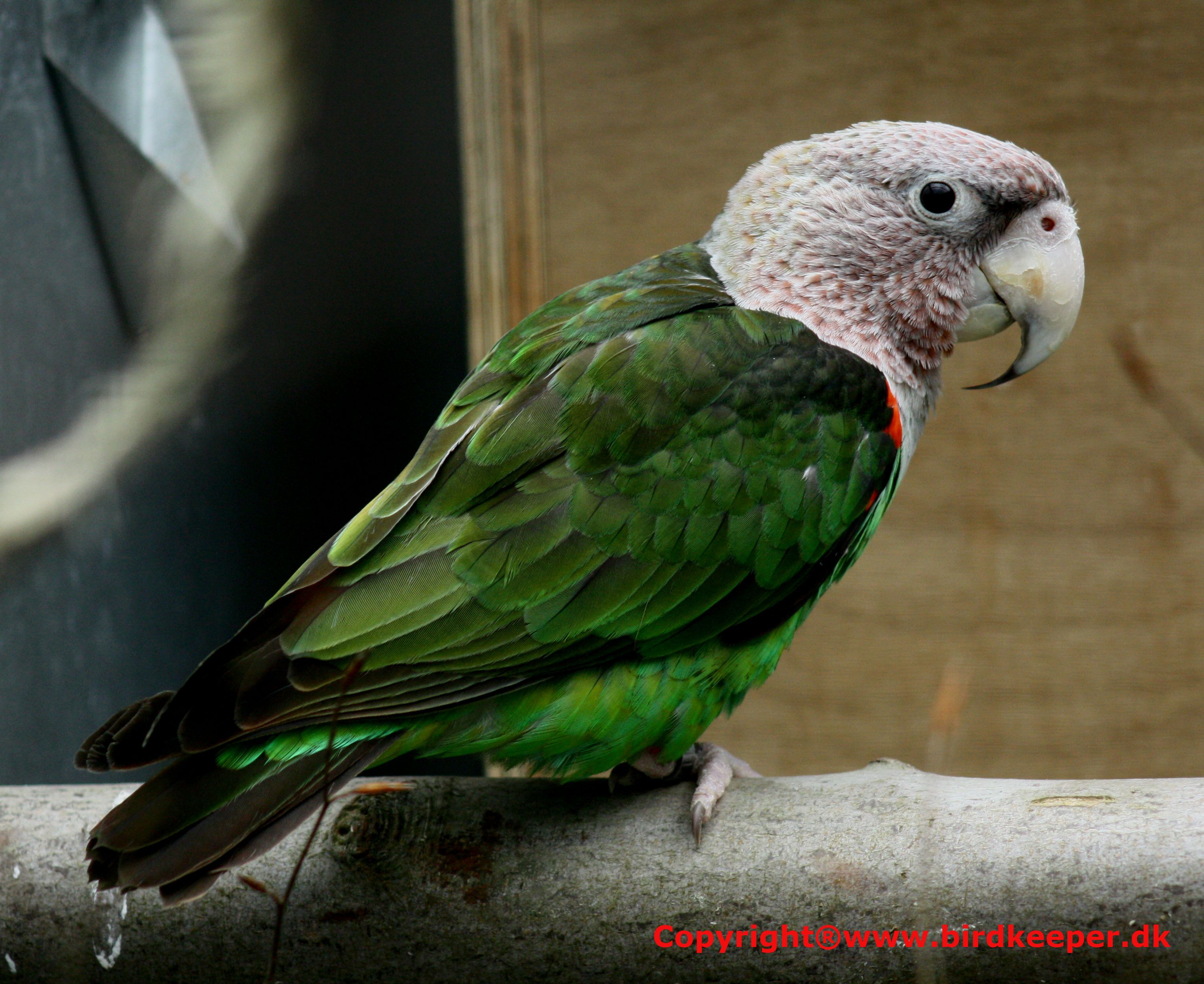
Despite its relatively secure status in nature, the Brown-necked Parrot is rare in aviculture. This is probably due to a combination of limited availability, its subdued and earth-coloured plumage and the fact that it does not conform to the popular image of a “colourful” parrot. Furthermore, there are some aviculturists who find this species too noisy, which I do not entirely agree with. Nevertheless, for the serious aviculturist, the species offers a remarkable range of qualities, including high intelligence, complex behaviour and a strong presence that far outweighs its modest colouration.
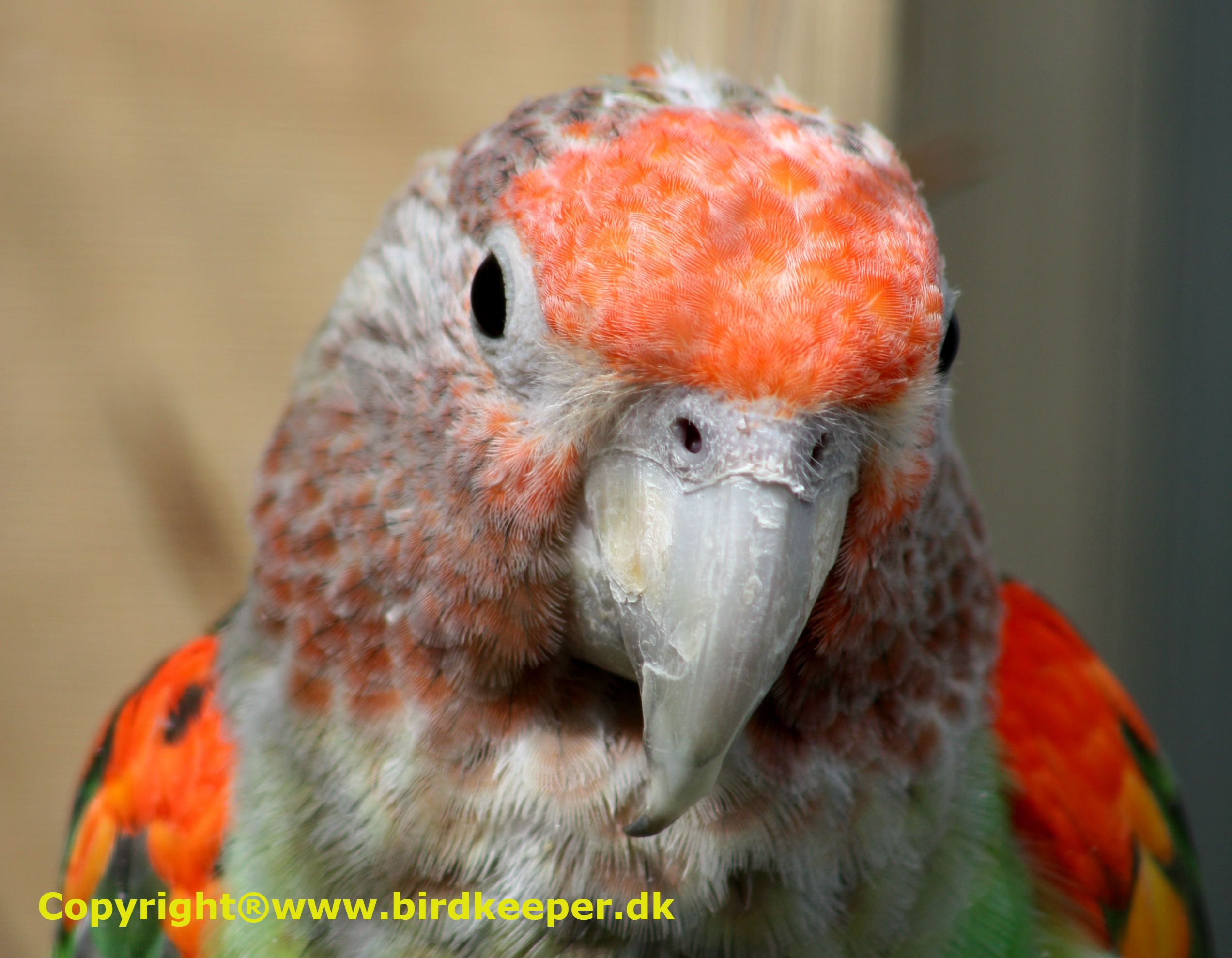
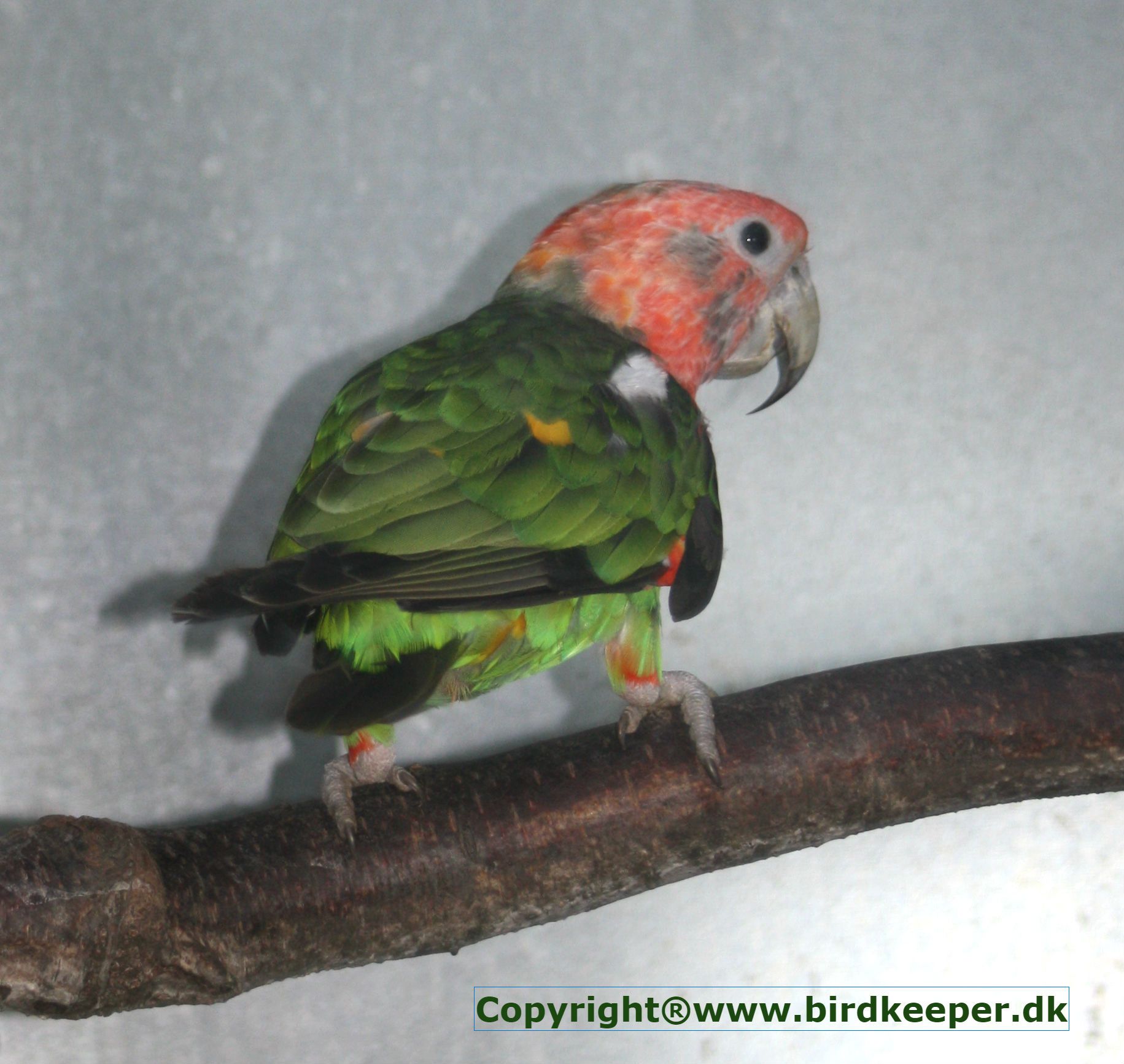
Sexual dimorphism is most evident in the female. Females display a distinct orange pink to salmon-coloured frontal head patch, which in some individuals may extend over a large part of the head as you can see in the photo at the very bottom of the article. This variation appears to be entirely natural and not the result of selective breeding. Males show a more uniform grey-brown head, with subtle tonal variation. This pattern of female-dominant colouration parallels that seen in the Eclectus genus and is unusual among African parrots.
Although I do not keep parrots as pets, experience has shown that Brown-necked Parrots can develop a strong interest in human interaction once they have fully settled and become familiar with their keeper. Vocal exchanges are common, and many individuals engage in sound-based “dialogues” with their keeper, which I have experienced myself with some of my birds, who always are kept in aviaries. During such interactions, the bird may also display excitement by rhythmically striking its massive beak against perches or aviary structures, a behaviour that appears to be part of its natural display repertoire.
The Brown-necked Parrot is closely related to the Cape Parrot, which is endemic to South Africa, but can be distinguished by its larger beak and slightly different head colouration. Following years of taxonomic debate and genetic and morphological studies, the Cape Parrot now generally seems to be accepted as a separate species, Poicephalus robustus. Consequently, the Brown-necked Parrot (Poicephalus fuscicollis fuscicollis) and the Grey-headed Parrot (Poicephalus fuscicollis suahelicus) are no longer considered subspecies of Poicephalus robustus, but closely related subspecies within the fuscicollis complex. This classification has become increasingly consistent in scientific and avicultural literature since 2019.
The common English name “Brown-necked Parrot” is somewhat misleading, as much of the head is brownish grey rather than distinctly brown, but the tone and intensity of the brown colour on the head can vary greatly from individual to individual. The more descriptive German names, Kuhl’s Graukopfpapagei, which emphasise the grey head colouration, are arguably more precise and have influenced recent English-language descriptions of the species. The same applies to the other subspecies, Reichenow's Graukopfpapagei (Poicephalus fuscicollis suahelicus), whose head is even more distinctly grey, in some cases, almost silver-grey.
There is no natural overlap between Poicephalus fuscicollis fuscicollis and Poicephalus fuscicollis suahelicus in wildlife. The two subspecies are totally geographically separated, as fuscicollis lives in West/Central and suahelicus in East/South-East Africa, primarily in southern Kenya, Tanzania, northern and central Mozambique, eastern Zambia and Malawi. Its distribution follows the eastern African woodland belt and parts of the coastal hinterland.
From a biological and avicultural perspective, this geographic separation further underlines the importance of not crossbreeding the two subspecies in human care, as such hybrids will compromise the efforts of serious breeders to preserve the two different subspecies genetically intact through responsible breeding.
From a health management perspective, the Brown-necked Parrot very unfortunately presents significant challenges within aviculture. The species appears to be particularly susceptible to Avian Borna Virus (ABV), the causative agent of very dangerous contagious disease, Proventricular Dilation Disease (PDD). Information from experienced European breeders and diagnostic studies suggests that a considerable proportion of the small European captive population (estimated up to approximately 70 - 80 %) may be infected, often without clinical signs. Such asymptomatic carriers represent a serious risk in mixed collections and can only be reliably identified through thorough serological testing in combination with PCR test. For this reason, all my birds are subject to comprehensive pre-introduction health screening using feathers, blood and cloacal swabs.

In some individuals - as is also known from a few other parrot species - a pronounced elongation of the tip of the upper beak (maxilla) is observed despite continuous access to fresh, uncontaminated natural branches and suspended rough mineral blocks. When this occurs, the condition should be viewed as a management and welfare issue rather than a cosmetic one. In most cases, the overgrown tip will eventually fracture spontaneously during the bird’s normal use of the beak, sometimes accompanied by minor bleeding. From a welfare perspective, a controlled and minimal intervention carried out by a very experienced hand or - which is preferable - under veterinary guidance may, in select cases, represent the least stressful and most humane option. Any such intervention should be conservative, avoiding the vascularised part of the beak, and followed by appropriate hygienic measures and observation. The primary objective must always be to prevent pain, injury and unnecessary complications, while continuously evaluating diet, environmental enrichment and underlying health as potential contributing factors.
In captivity, the species also shows an increased frequency towards destructive feather behaviour, particularly among hand-reared individuals. This underscores the importance of environmental enrichment, cognitive stimulation and structural complexity. The continuous provision of fresh natural branches is essential, as the species is an extremely powerful and persistent chewer.
Successful breeding of the Brown-necked Parrot in aviculture remains rare and should be regarded as a long-term project requiring experience, patience and careful management. Well-established, compatible pairs housed in spacious aviaries with minimal disturbance show the greatest potential for reproduction. Nest boxes should be robust, generously dimensioned and positioned high, reflecting the species’ preference for secure nesting sites. Even under optimal conditions, breeding attempts may be infrequent, and clutch sizes are typically small. It is essential to - once again -stress that the Brown-necked Parrot must not be crossbred with the closely related Grey-headed Parrot (Poicephalus fuscicollis suahelicus). Despite their close relationship, maintaining strict taxonomic integrity is both an ethical and conservation-related obligation in aviculture, particularly given the limited number of pure birds in human care.
Despite its heavy and sometimes clumsy appearance, the Brown-necked Parrot is a strong and direct flier. Aviaries must therefore provide adequate flight length and not merely vertical space. When kept in a spacious, well-designed aviary and allowed time to adapt, the Brown-necked Parrot proves to be a calm, observant and deeply impressive species that rewards patience, experience and responsible husbandry.
Best regards,
Jorgen Petersen
BIRDKEEPER Parrot Breeding Facilities
“Natural breeding, natural behaviour”
DENMARK
© Jørgen Petersen · BIRDKEEPER PARROT BREEDING FACILITIES - All rights reserved.

